
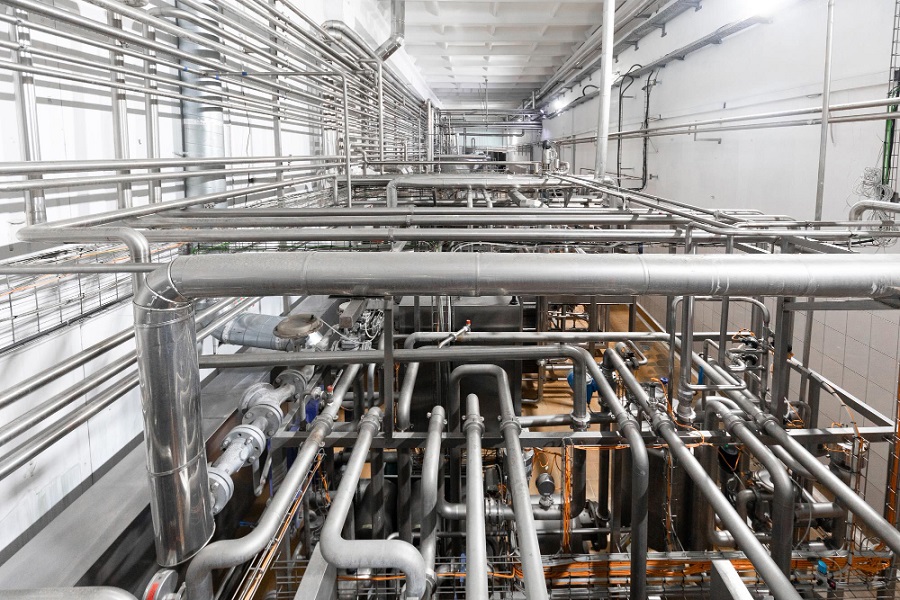
Piping systems are the lifelines of modern process plants. They carry fluids, gases, chemicals, and air throughout the facility—from one unit to another—and in the process, they undergo extreme stress and strain.
And while much attention is given to plant design and modeling, one critical aspect that can lead to significant issues during plant operations is piping stress. If not planned properly, the mechanical load that builds on these pipes during usage can lead to leaks, cracks, joint failures, and, in extreme cases, complete system shutdown.
What is Piping Stress and Why Does It Matter?
Piping stress refers to the internal forces (and deformation) that pipes experience due to fluid movement, pressure build-up, temperature changes, and/or movement of fluids from equipment and the surrounding environment.
In many facilities, pipes are subjected to various harsh and variable conditions, like:
- Variable fluid characteristics (temperature, pH, solids)
- Seasonal thermal expansion and contraction
- Uneven soil settlement
- Continuous plant operations with limited downtime
These factors put a lot of stress on the piping system and increase the likelihood of piping failure. That’s why, their operability, functionality, and safety demand rigorous evaluation.
Common Piping Stress Analysis Challenges and Ways to Overcome Them
Several key challenges tend to arise during piping stress analysis:
1. Complex Geometries and Fittings
Elbows, tees, reducers, and branch connections behave differently under load. These components deform more easily than straight pipes, under stress. Engineers use Stress Intensification Factors (SIFs) and flexibility factors to quantify these effects, but these values can be influenced by geometry, wall thickness, and connection method.
Without proper modeling, these areas become potential failure points, causing potential leaks and system failures.
2. Thermal Expansion and Contraction
Pipes carrying hot water, steam, or chemically reactive substances expand or contract significantly as temperatures fluctuate. In process plants, heating systems, chemical reactions, or high-temperature flows often result in substantial thermal differentials.
This may lead to pipe deformation, flange leakage, joint fatigue, and stress on pumps and tanks.
To avoid this, it is important to perform thermal piping stress analysis using software like CAESAR II or AutoPIPE.
3. Stress Codes and Standards Variability
Different design codes (e.g., ASME B31.3, B31.1) define stress and allowable limits differently. Misinterpretation or misapplication can result in designs that technically “pass” in software but fail in practice.
4. Multiple Operating Scenarios
Piping systems rarely operate under a single condition. They experience a range of temperature shifts and pressure variations. This creates different forces in the system.
Without careful planning, the system might pass stress analysis for one case but fail under another. This becomes particularly problematic when parts of the piping system are made of different materials. It makes piping design and drafting even more complex.
To stay sorted and avoid mistakes, it is important to define all expected operating scenarios early in the design process. Make sure the stress analysis considers all potential load combinations. It’s common for a system to have 8-10 primary operating cases, which can result in over 100 individual load cases when combined. Consider all of them; always validate worst-case scenarios, not just average conditions.
5. Support Design and Placement
Improperly designed support systems can cause pipes to sag or vibrate. In many industrial plants, supports are retrofitted or adjusted post-installation, leading to issues and errors during performance. Additionally, low-quality or weak supports can result in overloads and stress on adjacent sections.
A detailed support analysis by experts is required to identify the correct support types and calculate optimal spacing. Modal and dynamic analysis may be required if the piping is subject to vibration from rotating equipment or flow-induced excitation.
Best Way to Manage Piping Stress in Process Plants
Piping stress challenges in process facilities are both common and complex. Ignoring them during piping design and drafting phase can lead to minor leaks to major operational shutdowns. But the good news is that with the right technique and professional pipe stress analysis services, this is completely manageable.
By understanding the sources of stress and by using professional analysis tools, experts at Enginerio can help you create piping systems that are safe, robust, and built to withstand extreme plant conditions. They leverage their years of knowledge and experience to optimize layouts, understand stress conditions, and recommend design changes that prevent costly issues down the line.
Need help designing a stress-free piping system?
Partner with Enginerio for end-to-end piping design, drafting, and plant engineering services. From detailed stress analysis to complete piping layout and drafting solutions, we offer customized services tailored to your plant’s needs.